5 pm | Talk with Isabel Lewis and Martine d‘Anglejan-Chatillon, moderated by Andrea Lissoni
7 pm | Live stream Operator's Act III from Whitney Museum, New York
What happens to art when it is performed and experienced across digital and physical spaces at once? And how does this change the way international art organisations can work together?
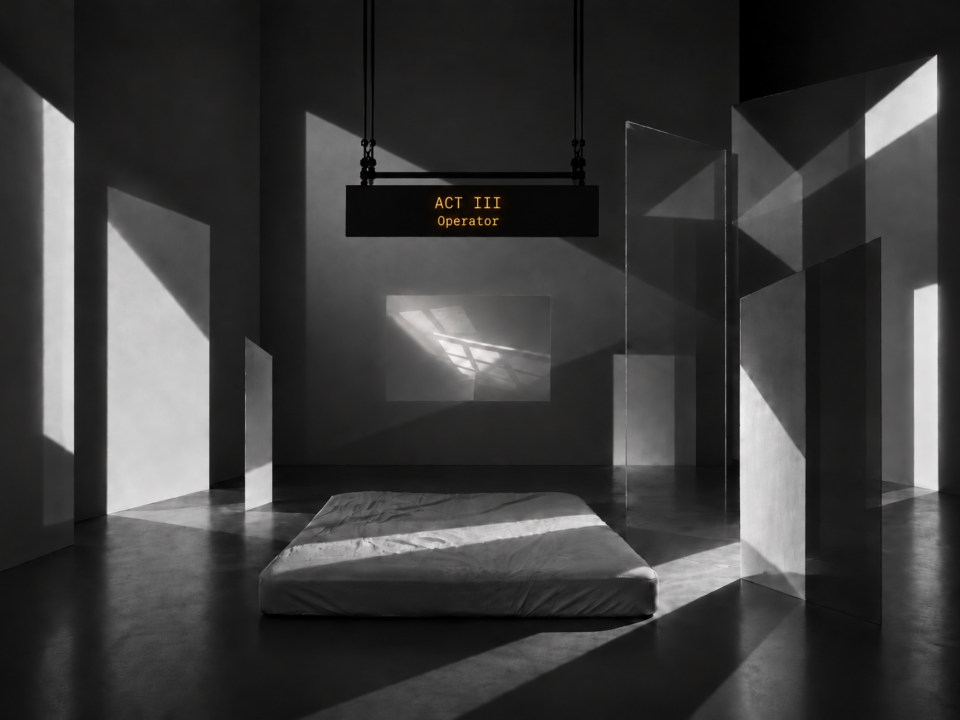
On November 21 at 7pm, we invite you to experience Act III by artist duo Operator (Ania Catherine and Dejha Ti) live at Haus der Kunst, as the performance unfolds simultaneously across an international network of art organisations and publics.
For 80 minutes, computational choreography and spoken narrative come together in a theatrical work that makes the digital processes behind the performance visible. Presented as part of artport: A History of Internet Art at the Whitney Museum of American Art in New York, the performance connects Haus der Kunst in real time with arts centers and museums including LACMA in Los Angeles, PHI in Montreal and OGR in Turin.
Before the livestreamed performance, at 5pm, Isabel Lewis (Tanzquartier Wien) and Martine d’Anglejan-Chatillon (MDAC Productions) join Andrea Lissoni for a conversation on how performative artworks are made and circulate in an increasingly digital world, and how international art organisations can work together differently across borders.
Funded by “Übermorgen – New Models for Cultural Institutions”, an initiative by the German Federal Cultural Foundation.
About the work
Human Unreadable is a multimedia performance by artist duo Operator (Ania Catherine and Dejha Ti), which began in 2022 by asking how much of a body survives translation into code and its absorption into technological systems. Drawing on histories of experimental choreography and art and technology - from Merce Cunningham and Analivia Cordeiro to E.A.T. - Human Unreadable is a three-act structure exploring “the slow recovery of the human.” Operator built a library of dance movements and an algorithmic method for generating choreographic sequences stored on the Ethereum blockchain. In Act I (May 2023), the artists created 400 visual compositions through this generative code and auctioned them as NFTs (Non-Fungible Tokens). In this way Act I obfuscated each underlying choreographic sequence within a generative artwork. Act II (November 2023) allowed collectors to uncover the dance sequences behind their Act I artworks in the form of choreographic scores and record them on the blockchain, making them visible to the public.
In Act III, the first hundred choreographic scores (#2–101) become the raw material for an evening-length multimedia performance. Dancers embody the choreography, bringing the generative art out of the screen into performers. The initial obfuscation resolves through presence: bodies witnessing bodies in the absence of technological mediation. In Act III the work will become a sort of X-ray of the artists' and audience’s own negotiations between body, ambition, and technology.
Conceived, Written and Directed by Operator. Script: Operator, Paul Bennun. Composer: RYAT. Creative Producer: Alex Darby.
Operator’s Act III was commissioned by the Whitney Museum of American Art.
About the conversation
Isabel Lewis comes from an artistic background and currently runs Tanzquartier Wien as artistic director. Since 2021 she has been a member of the Haus der Kunst Sounding Board, where she has accompanied our transformation through the program from the start. Martine d’Anglejan-Chatillon has a background in arts management and philanthropy. As founder of MDAC, she has been instrumental in pioneering ambitious hybrid and technologically advanced productions across disciplines. She serves on the board of the AI21C Foundation shaping the Director’s Innovation Circle at Haus der Kunst, closely following our institution’s digital development.
Moderated by Andrea Lissoni, Artistic Director of Haus der Kunst, the discussion begins with Operator’s work and opens onto wider questions around how art lives beyond established formats. Human Unreadable is where live bodies, generative code and blockchain meet, challenging boundaries across participation, experience, and art collecting. From there, the dialogue will turn to the institutions. What happens when the program is no longer confined to its rooms? How do artists, institutions and patrons share responsibility for work that does not fit established categories? How do digital and live formats change the ways audiences come together? And what structures, partnerships and ways of working do cultural institutions need to stay open, relevant and resilient in the years ahead?
Join us and bring your perspective into questions that will shape our 2027 program.
Artist info
Operator
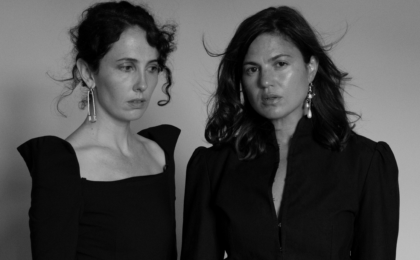
Ania Catherine (geb. 1990, USA) und Dejha Ti (geb. 1985, USA) sind ein Künstlerduo, dessen gemeinsame Praxis als Operator kritische und konzeptuelle Ansätze zum Thema Erfahrung entwickelt. Mit Tis Hintergrund als Multimedia-Künstlerin und HCI-Technologin sowie Catherines Hintergrund als Choreografin und Performancekünstlerin entwickeln sie medienunabhängige Arbeiten, die Umgebung, Technologie und den Körper miteinander verbinden. Das Duo hat zwei Architekturen für die choreografische Bewahrung und Transaktionsfähigkeit geschaffen: Operator Generative Choreography Method (2023) und Performance Operating System (2026). Operator wurde zweimal mit dem Lumen Prize (Immersive Environments im Jahr 2021 und Generative Art Award im Jahr 2023), mit der lobenden Erwähnung beim Prix Ars Electronica (2026), mit dem ADC Gold Cube (2021) sowie einer lobenden Erwähnung beim S+T+ARTS-Preis (2021) ausgezeichnet. Sie hielten Vorträge bei Veranstaltungen und an Institutionen wie der University of Cambridge, der Art Basel, dem ZKM, dem Christie’s Art+Tech Summit, Bloomberg ART+TECHNOLOGY und dem MIT Open Doc Lab.
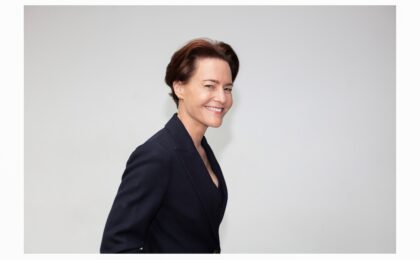
Martine d’Anglejan-Chatillon
Martine d’Anglejan-Chatillon is a leading cultural entrepreneur and founder of MDAC Productions. Her early career at The National Gallery, London, the Rothschild Foundation and Whitechapel focussed on museum development and large-scale cultural initiatives. As co-founder of Thomas Dane Gallery, she developed a speciality in moving image and digital technology. D’Anglejan-Chatillon went on to serve as Executive Producer at Phenomen Films, overseeing the release of “DAU”. Since founding MDAC in 2019, she has produced ambitious hybrid projects, including several in art-adjacent fields such as film, fashion, advanced media and the performing arts. She was recently co-curator with Philippe Parreno of the Okayama Art Summit and producer of his first feature film. She currently serves on the board of the Somerset House Trust and is also a board member of the AI21C Foundation, which shapes the Director’s Innovation Circle at Haus der Kunst.
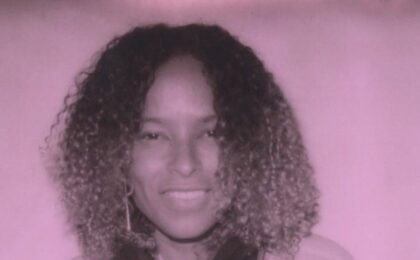
Isabel Lewis
Isabel Lewis (b. 1981, Santo Domingo, Dominican Republic) is an artist trained in dance, philosophy, and literary criticism. She creates works that resist classification, affirming pleasure, connection, and permeability. Her terminology for many of her works is occasions: immersive social situations in which the dramaturgy of the moment is composed in real time. Her works have been presented internationally in biennials and solo exhibitions as well as in music, theatre, and dance festivals. She received special recognition for An Occasion hosted by Isabel Lewis, shown at the 2014 Biennale de l’Image en Mouvement at Geneva’s Centre d’Art Contemporain and at Frieze London. Since the 2025/26 season, she has been artistic director of Tanzquartier Wien together with Rio Rutzinger. She is a member of Haus der Kunst’s Sounding Board.

Andrea Lissoni
The conversation will be moderated by Andrea Lissoni, the Artistic Director of Haus der Kunst.