A Prototype Creative R&D Initiative
We invite digital and interdisciplinary creators worldwide to participate in HausCode, a new prototype for Creative Research and Development within Haus der Kunst.
Our artistic programme draws new lines in contemporary art history and weaves projects into a narrative that evolves over time. It presents exhibitions and artworks that invite the public into layered systems of meaning, some visible, some less, some unfolding through time or repetition. HausCode extends this approach by supporting digital responses that engage with these structures, reinterpreting them and creating a new context to understand our increasingly digitalised world.
The annual open call addresses international applicants and encourages unconventional ways to engage with the artistic programme, shaping their concepts remotely without necessarily having to be physically present.
The Inaugural Cycle
HausCode inaugural cycle is centered on the exhibition “For Children. Art Stories since 1968”, which presents artworks conceived for children and approaches childhood as a space to reconsider forms of learning, institutional transformation and the making of art history.
Informed and inspired by the exhibition reinterpreting childhood and exploring how curiosity and experimentation expands and accompanies us beyond these early life years, the three contributions each reflect different perspectives as they engage with systems of learning and play through interactive sound, text-based, and gaming environments. Following the open call and selection process, the projects developed over three months in close exchange with the Haus der Kunst team. Through this process, sharing and connection gradually became central to the first edition.
How do personal memories merge into a space of shared emotion? What happens when a machine is taught to interact in intimate and imperfect ways? And how does physical experience enter digital realm through personal interpretation? Working through emotion, voice, and play as universally understood forms of expression, the three digital projects form the first chapter of a growing entity that will continue to expand over the coming years.
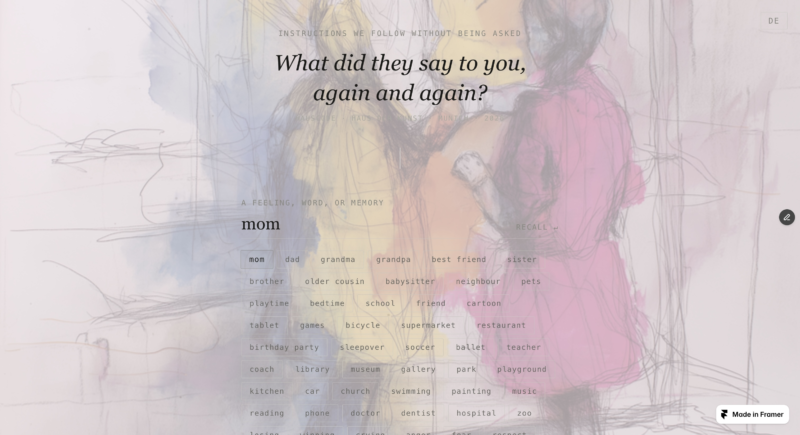
Adaeze Okaro, Instructions We Follow Without Being Asked, 2026
Instructions We Follow Without Being Asked is an interactive digital project that sits at the intersection of memory, identity, and collective experience. It explores instructions, phrases, and lessons absorbed in childhood through repetition, atmosphere, and correction, and how they continue to shape behaviour, values, and our sense of self long after they enter us. The project draws on real responses collected through a public questionnaire, weaving anonymous voices from across cultures and generations into a shared environment of childhood experience. You are invited to contribute your own remembered instructions, allowing the work to remain a living, growing organism that changes with every person who enters it.
“When I began this project I thought I was making something about childhood. I did not realize […] that I was making something about now. The instructions we received as children do not stay in the past. They travel with us. […] Most of us follow them without knowing we still do. That gap between the instruction and the person it made, that is where this work lives.” - Adaeze Okaro
Fá Maria, Lullabies for Machines, 2026
Technical implementation by David Lazãr
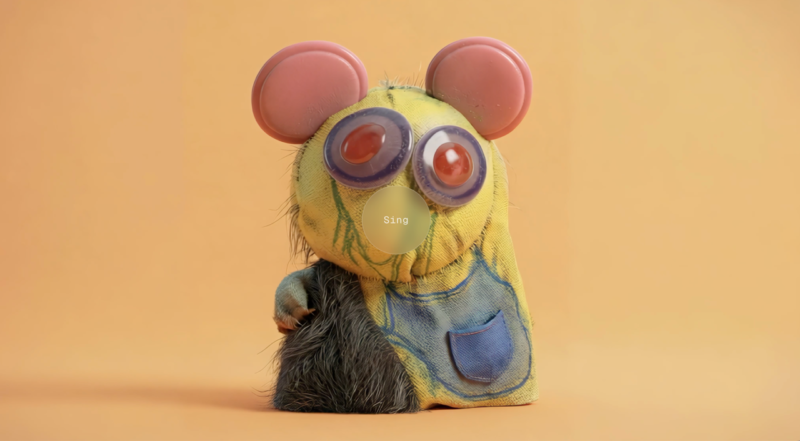
Lullabies for Machines is a web-based audiovisual project that asks what happens when intimate, profoundly human practices such as lullabies are transformed through computational systems. You are invited to hum or sing into an AI model trained on donated lullabies from different voices, ages, and cultures. The result is not simply the user’s own voice, nor a finished collective song, but a hybrid vocal encounter: one voice passing through the traces of many others, intermediated by AI.
“A lullaby is usually associated with care, closeness, memory, and reassurance. When this passes through an AI model, it becomes unstable and unfamiliar, but it can still retain traces of tenderness. The project became more focused on that tension: the voice remains personal, but it is also altered by the presence of other voices inside the system.” - Fá Maria
Mining Raw Letters (Nell May & Kevin Kuhn), For Children custom School Pixel game level and editor, 2026
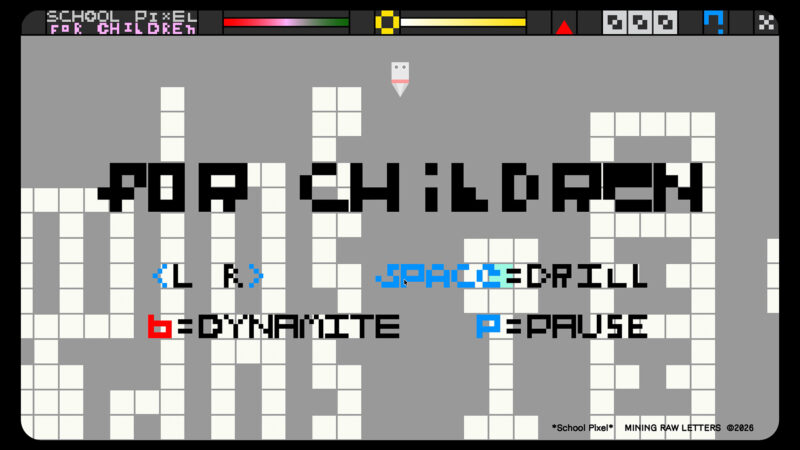
School Pixel is a video game built around a font — one drawn from a workshop with 130 children held in New Zealand. Moving through a custom level inspired by the exhibition “For Children. Art Stories since 1968,” you are invited to play navigating a drillbot through narrative worlds in search of Energy Letters. Shifting from player to maker, users build their own worlds with the School Pixel For Children game editor – Erase to carve paths, Paint and Fill landscapes Elements and type words for the drillbot to collect – test play and submit into the evolving online collection of levels for others to try.
“"For Children. Art Stories since 1968" became the custom level inspiration. The School Pixel For Children game editor draws on childhood memories of pixel painting on a Macintosh Plus. Its friendly interface invites world-making.” - Mining Raw Letters
Biographies
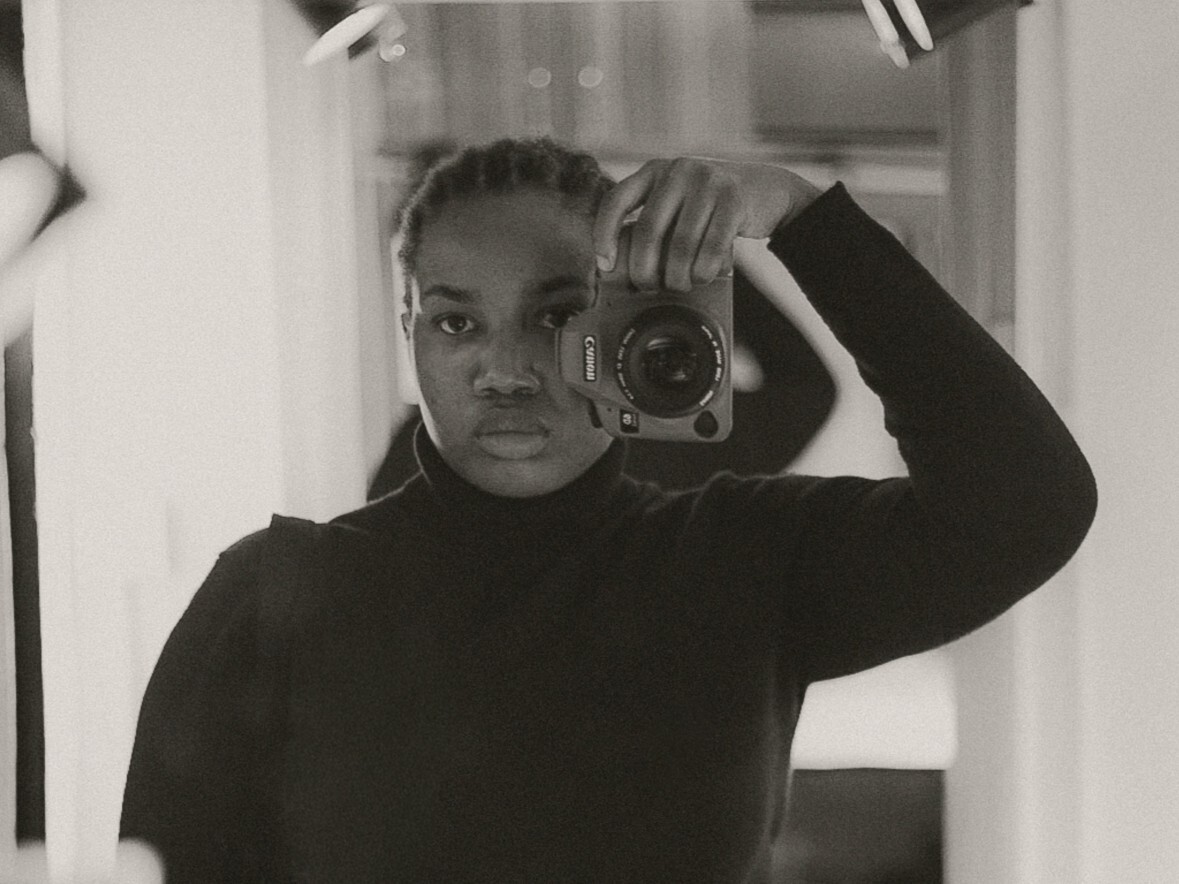
Photo: Adaeze Okaro
Adaeze Okaro is a Nigerian visual artist, creative director, and AI image maker working across photography, digital art, and generative image practices. Her work explores love, melancholy, memory, beauty, and the shifting internal weather of emotion, often focusing on how people recall, interpret, and emotionally inhabit the world around them.
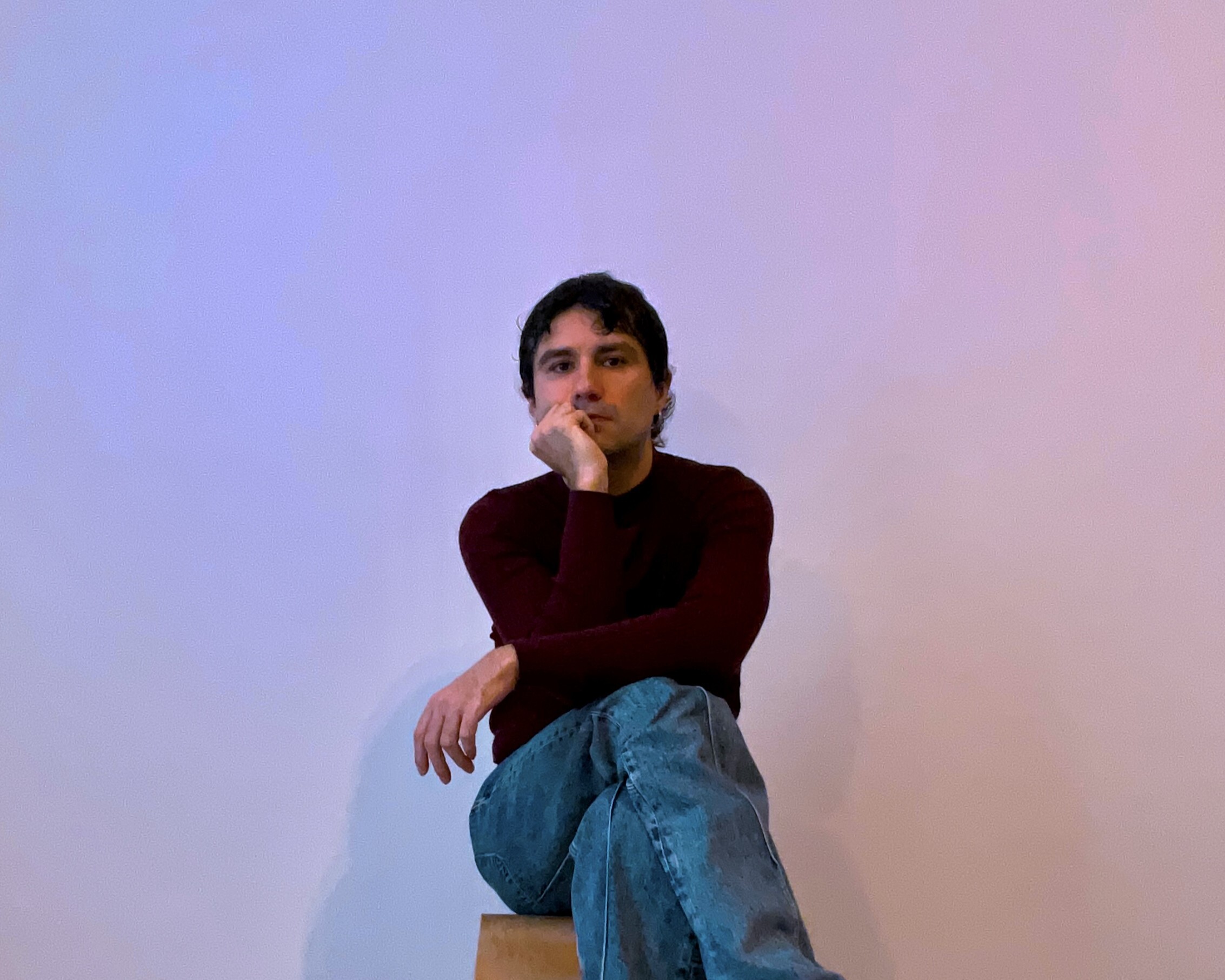
Photo: Courtesy the artist
Fá Maria is a Portuguese, Berlin-based artist, composer, and researcher working at the intersection of voice, technology, and embodiment. Their practice examines how computational systems mediate intimacy, particularly how vocal practices are learned, transmitted, and transformed through cultural and technical frameworks.
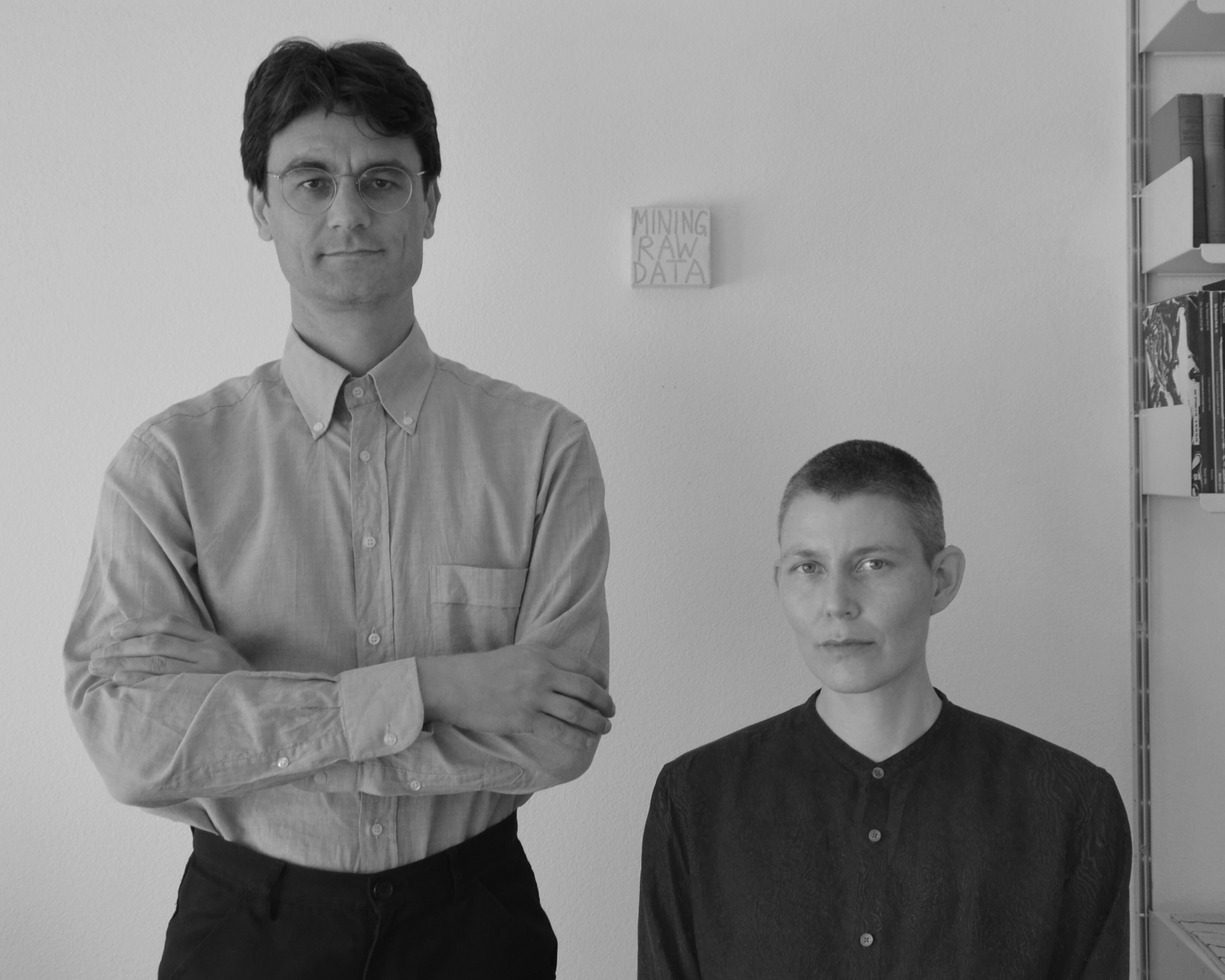
Foto: ©miningrawletters
Mining Raw Letters (Nell May & Kevin Kuhn) is a Swiss-based type, design and research studio founded in 2025 by New Zealand type designer Nell May and German writer and developer Kevin Kuhn. They work where letters, language, research and code meet.
What is HausCode? The Institution as Avatar
HausCode is an experimental annual initiative through which digital practitioners collaborate with and respond to the storytelling that unfolds through the artistic programme of Haus der Kunst, acting as a tool for engagement and learning in the digital sphere.
HausCode invites diverse creatives to “embody” the programme, becoming its sensory extensions and interpretive agents. These creators operate not as illustrators of curatorial ideas, but as independent agents who decode, critique, or reimagine the institution’s logic and narration from within. Contributors get exclusive glimpses behind the scenes of the exhibitions and institutional vision, and are invited to reveal and reinterpret the hidden structures, codes and rituals that govern artistic and institutional practice.
Creative contributions will serve as a research and interpretation tool that operates as a conceptual avatar of Haus der Kunst: a generative identity that expands and evolves through each cycle, shaped by the creators who engage with it.
HausCode is conceived by Haus der Kunst as part of its future-oriented development strand, managed and overseen by Margarita Shabaeva. The project is advised by Chris Michaels.