
Architectural intervention and selected archival materials from Musée de l'Orangerie, 2025
The staircase of the Südgalerie unfolds as a threshold within Wassermusik—a space where architectures and temporalities fold into one another. In Gaillard’s work, the threshold is never singular: it refracts, juxtaposes, and confounds objects, associations, and events across time.
Suspended from the balcony, a glass vitrine presents photographs and shell fragments (1944-1980) selected by the artist from the archive of the Musée de l’Orangerie in Paris. Claude Monet began work on his monumental Nymphéas during the First World War, in response to the surrounding devastation. He later donated this work to the French state as a symbol of peace. Installed in its permanent home, the Orangerie des Tuileries, in 1927—a few months after Monet’s death—it is often regarded as one of the earliest site-specific works of modern art.
In August 1944, during the Liberation of Paris, artillery fire tore through the Orangerie’s roof, and splinters cut into the canvases. One of the paintings, Reflets verts, still bears this wound—an accidental mark inscribed on a meditation on water and light. The archival photographs selected by Gaillard follow this arc: intact halls, ruptured ceilings and torn paintings, then to the postwar reconstruction beneath a glass grid ceiling in the 1970s.
By setting this work in the architecture of Haus der Kunst, the artist connects the seemingly different but connected histories of war and events. Ceiling to ceiling, fracture to fracture. And between them, water—as force, image, memory—slips across both sites, a threshold in its own right.
The artist modified the lighting and ambience of the stairway by working with lights, and replacing ceiling panels bearing water-stain drawings, and other objects into the ceiling space. These water-stain drawings echo the scenes captured in the archival photographs from the Musée de l’Orangerie. On the marble floor below, the most enduring non-human witnesses reveal themselves—the ammonite fossils embedded in the stone, glimmering with splashes of water.
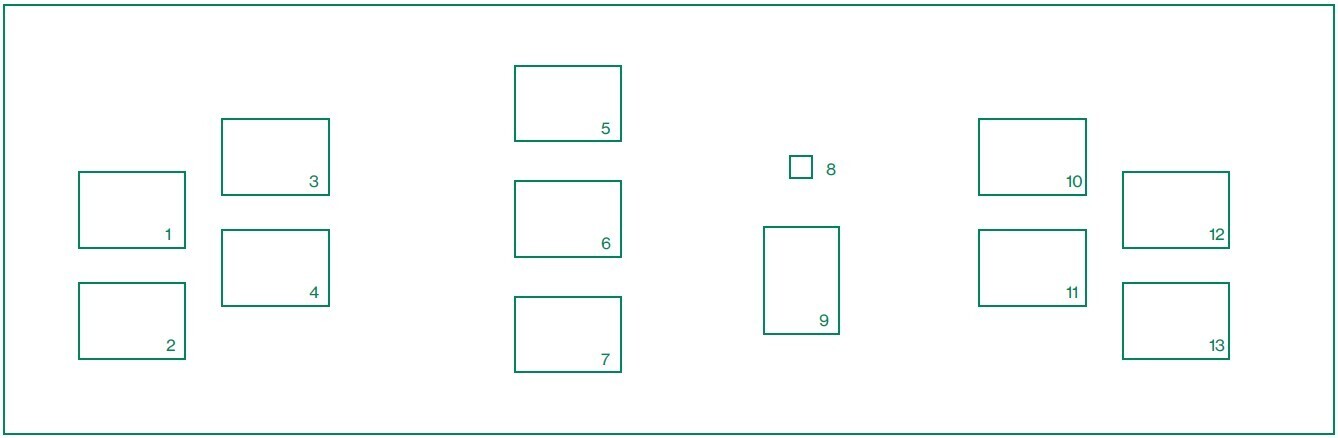
1:
Orangerie des Tuileries. General view of Première salle des Nymphéas.
East wall. Impact of shell that crossed the preceding room during the Battle of the Tuileries
Black and white photograph, 18 × 24 cm
Taken 1944
Paris, Musée de l'Orangerie, Jean Walter and Paul Guillaume Collection.
2:
Orangerie des Tuileries. Deuxième salle des Nymphéas.
East wall at the back of the salle. The two willows
Black and white photograph, 18 × 24 cm
Taken 1944
Paris, Musée de l'Orangerie, Jean Walter and Paul Guillaume Collection.
3:
Orangerie des Tuileries. Deuxième salle des Nymphéas.
West wall damaged by shell. Tree reflections
Black and white photograph, 18 × 24 cm
Printed 1980
Paris, Musée de l'Orangerie, Jean Walter and Paul Guillaume Collection.
4:
Orangerie des Tuileries. Damaged during the Liberation of Paris.
Première salle des Nymphéas. South wall. Right section of the panel
Black and white photograph, 18 × 24 cm
Taken 1944
Paris, Musée de l'Orangerie, Jean Walter and Paul Guillaume Collection.
5:
Orangerie des Tuileries. General view of Première salle des Nymphéas.
East wall. Panel damaged by a shell that passed through the preceding room during the Battle of the Tuileries
Black and white photograph, 18 × 24 cm
Taken 1944 Paris
Musée de l'Orangerie, Jean Walter and Paul Guillaume Collection.
6:
Orangerie des Tuileries. Salle II, East and south wall.
Black and white photograph, 18 × 24 cm
Taken 1944 Paris
Musée de l'Orangerie, Jean Walter and Paul Guillaume Collection.
7:
Orangerie des Tuileries. Première salle des Nymphéas.
Green reflections. Tear caused by shell splinters
Black and white photograph, 18 × 24 cm
Taken 1944, printed later Paris
Musée de l'Orangerie, Jean Walter and Paul Guillaume Collection.
8:
Shell fragments that perforated the Orangerie des Tuileries and damaged Monet’s Nymphéas
25 August 1944
Steel, 2.6 × 3.5 × 4 cm
Paris, Musée de l'Orangerie, Jean Walter and Paul Guillaume Collection.
9:
Orangerie des Tuileries. Première salle des Nymphéas.
East wall. Detail view. Green reflections
Black and white photograph, 18 × 24 cm
Taken 1944
Paris, Musée de l'Orangerie, Jean Walter and Paul Guillaume Collection.
10:
Orangerie des Tuileries, damaged during the Liberation of Paris.
Première salle des Nymphéas. South wall, right section of the panel.
Black and white photograph, 18 × 24 cm
Taken 30 August 1944
Paris, Musée de l'Orangerie, Jean Walter and Paul Guillaume Collection.
11
Orangerie des Tuileries. Deuxième salle des Nymphéas, west and south walls.
Black and white photograph, 18 × 24 cm
Taken 1978
Paris, Musée de l'Orangerie, Jean Walter and Paul Guillaume Collection.
12:
Orangerie des Tuileries. Première salle des Nymphéas, “Green Reflections.” East wall.
Black and white photograph, 18 × 24 cm
Taken 1980
Paris, Musée de l'Orangerie, Jean Walter and Paul Guillaume Collection.
13:
Orangerie des Tuileries. Deuxième salle des Nymphéas.
Black and white photograph, 18 × 24 cm
Taken 1978
Paris, Musée de l'Orangerie, Jean Walter and Paul Guillaume Collection.