
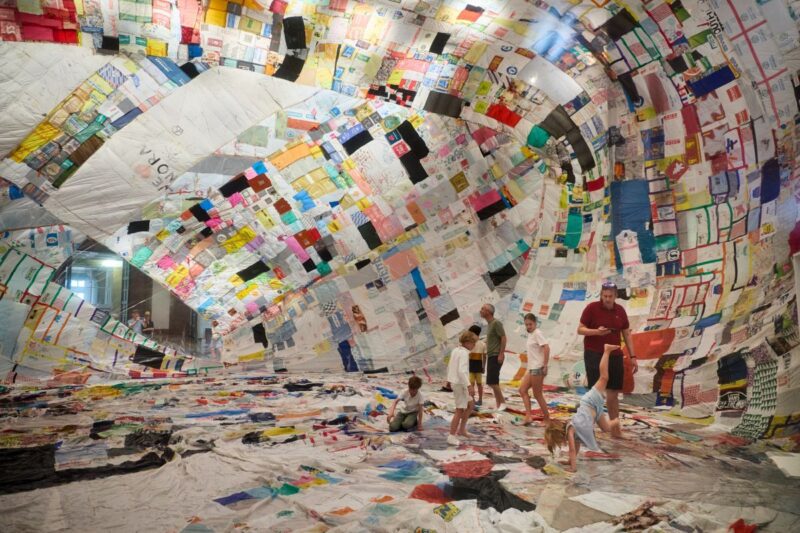
Tomás Saraceno (b. 1973, San Miguel de Tucumán, Argentina) bridges art, architecture, and science to imagine possible eco-social futures. This new exhibition brings together two central strands of Saraceno’s long-term research — Aerocene and Arachnophilia — alongside a new co-commission developed in close collaboration with the Indigenous communities of Red Atacama, Las Salinas Grandes in northern Argentina. Their ongoing struggle against lithium extraction, and the pressure it places on the region’s water cycles, becomes the starting point for an artwork that reaches beyond the exhibition space.
At Haus der Kunst, these ideas materialise in air-fuelled sculptures, shared multispecies habitats, and spatial environments that invite new forms of attention. Together, these works create a platform for rethinking forms of coexistence across human and non-human worlds. They also open a wider dialogue about the ecological and social forces shaping the global energy transition.
With many collaborators that shape the installations and learning programme, the exhibition transforms the building into a space for planetary attunement. It is an invitation to inhabit the museum differently. In dialogue with other programmes, this exhibition highlights new ways of sensing, imagining, and living within the entangled systems that sustain us.
Curated by Sarah Johanna Theurer and Andrea Lissoni
With support by Aditi Kapoor
The exhibition is generously supported by Sergio Linhares and Stefan Vilsmeier.
Brainlab is exhibition partner for “Tomás Saraceno. Ancestral Futures“.
Swimwear on “The Sanctuary of Water”
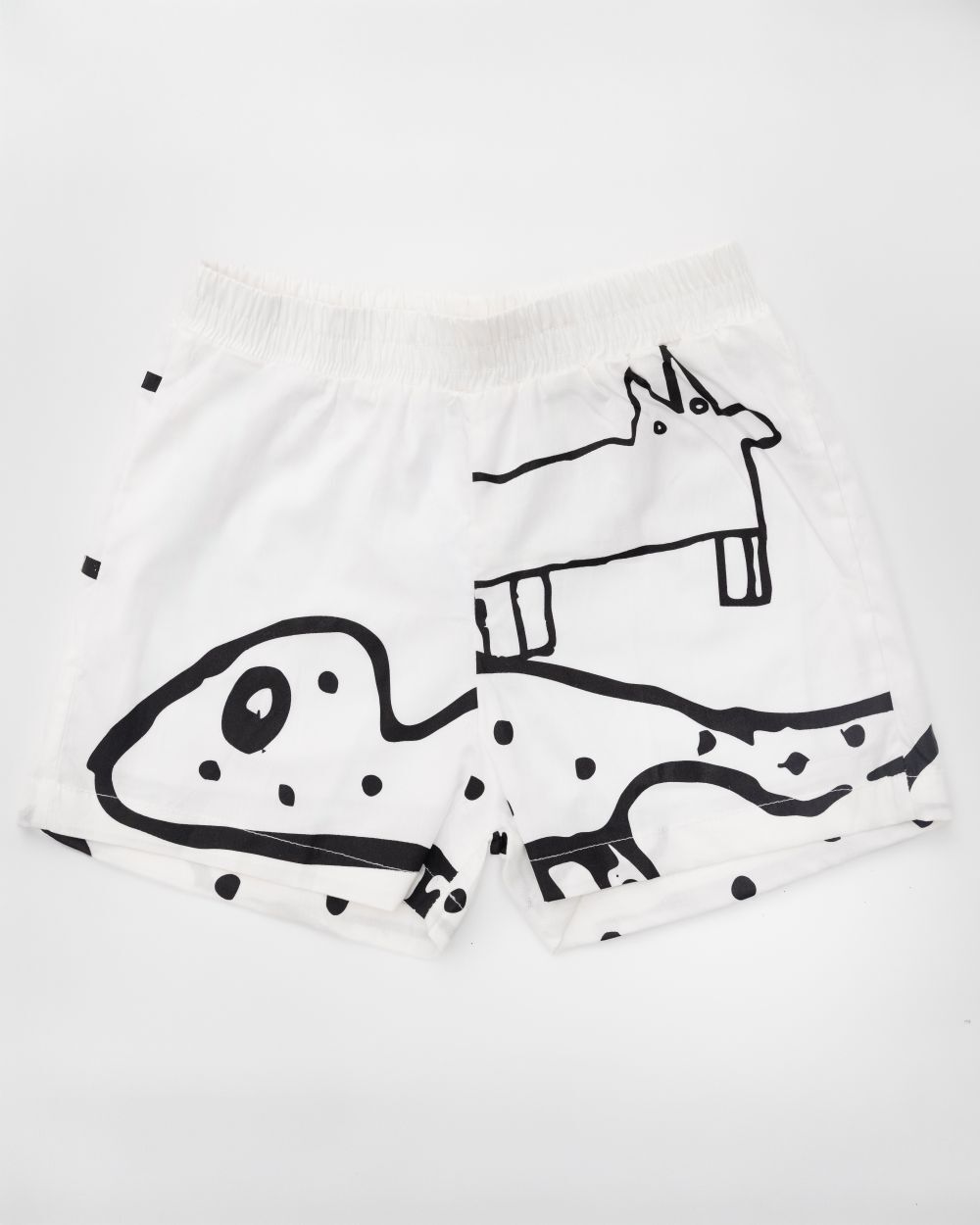
The purchase directly supports the 11 Indigenous Communities of Red Atacama and the construction of The Sanctuary of Water, built by them from salt and water, and rising like an apacheta: collectively, stone by stone, as an offering to Pachamama.
Drawn from the waters of Hanan Pacha, the world above where sky and stars meet, the forms across this swimsuit were first imagined in the skies above Salinas Grandes, northern Argentina, by children from the Indigenous Communities who have lived on and stewarded this biodiverse ecosystem: for millennia. Towards more just cycles of water, memory, and life, the drawings were made as part of Fairclouds, an initiative for ecosocial justice connecting people around the world to the Communities' defense of water.
A selection of the swimwear
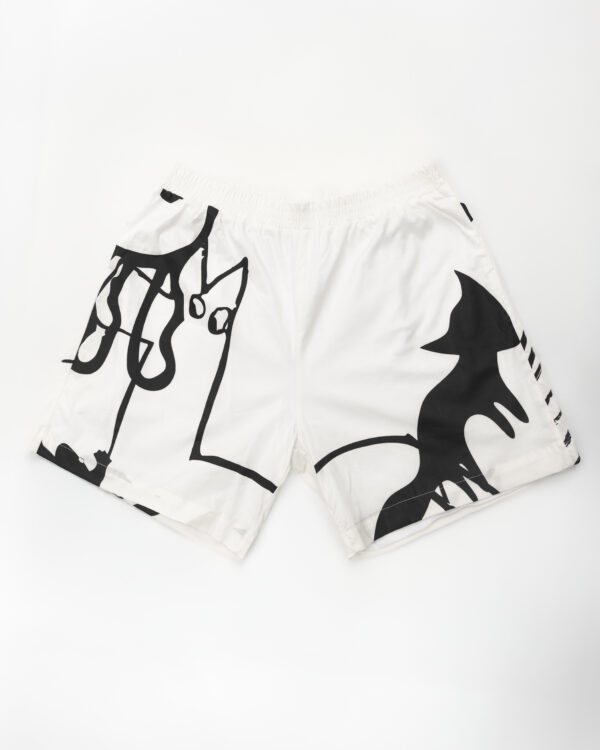
Photo: Studio Tomás Saraceno.

Photo: Studio Tomás Saraceno.
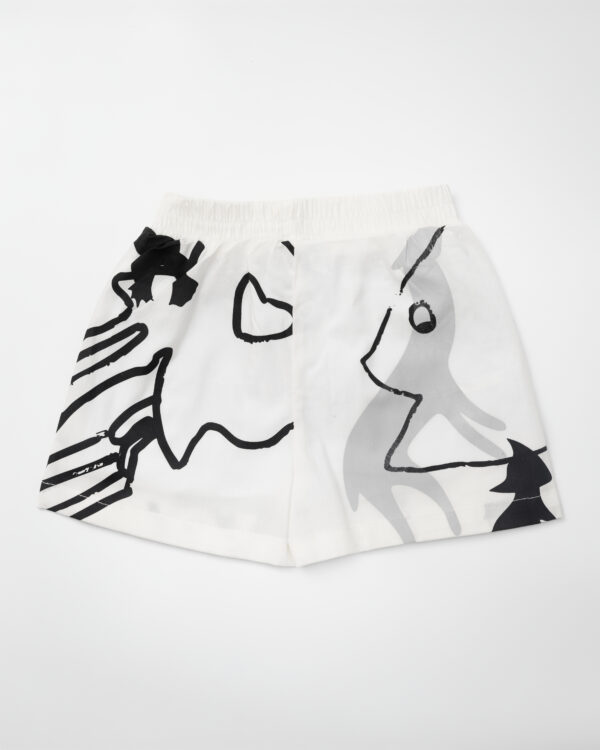
Photo: Studio Tomás Saraceno.
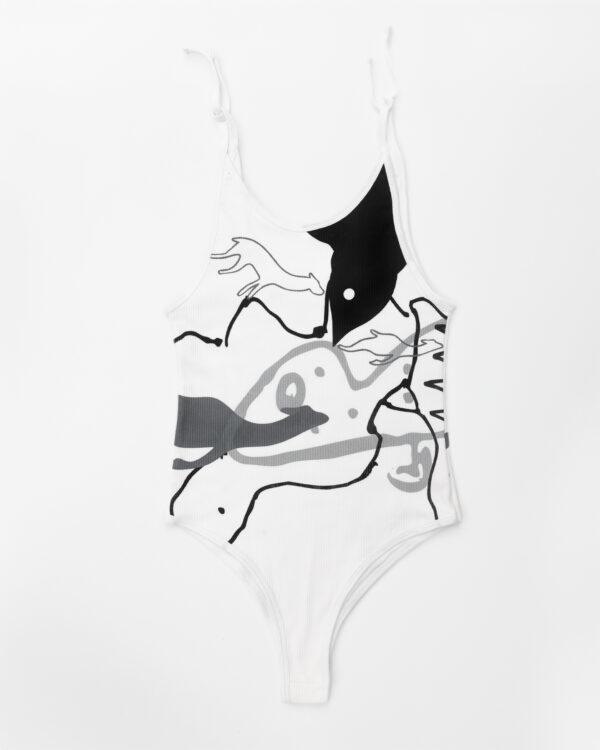
Photo: Studio Tomás Saraceno.
Informations
Swimwear for adults and children is available in sizes S | M | L | XL
Available exclusively via the Walther König bookshop at Haus der Kunst.
Comfortable for the environment, and gentle on the body.
Made from cotton, this swimsuit dries a little more slowly than usual: a small reminder that water, if we listen, teaches us how to flow.
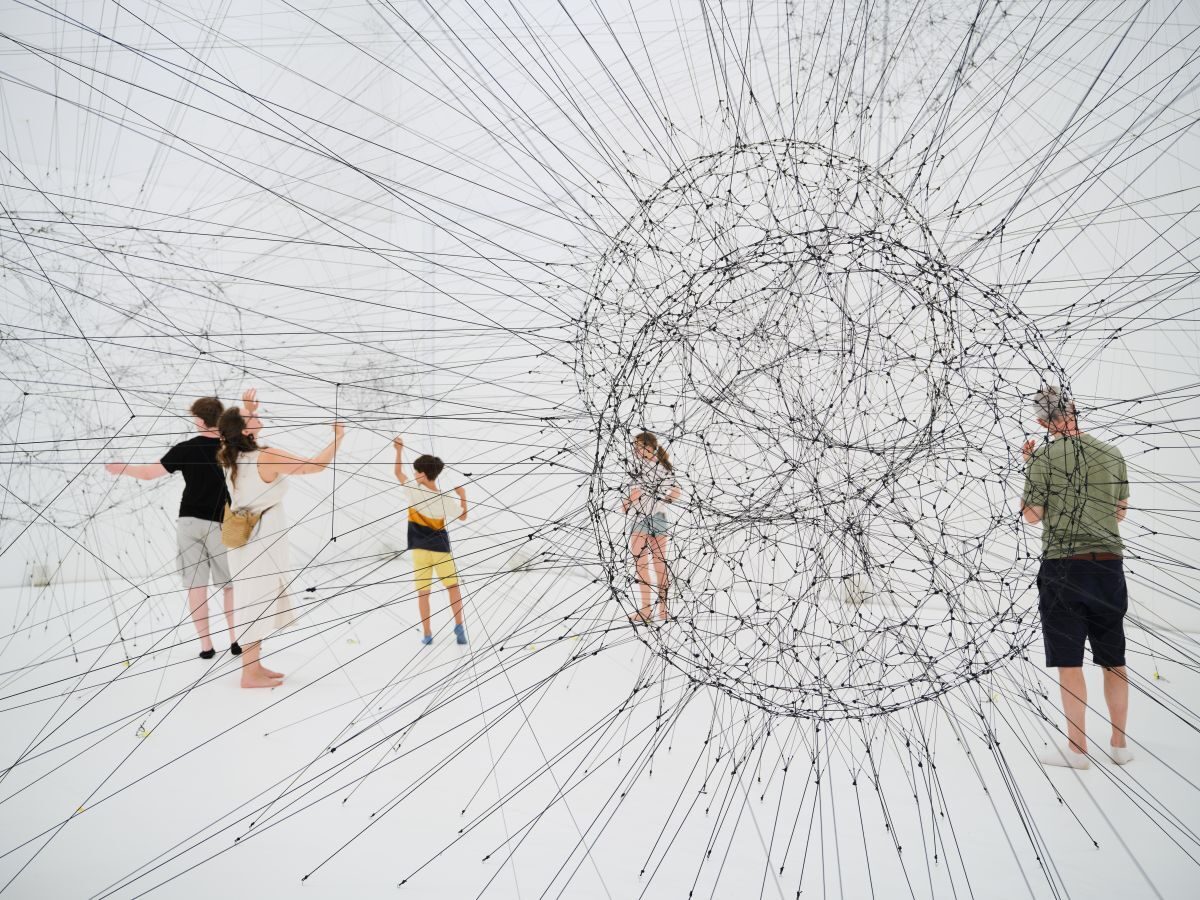
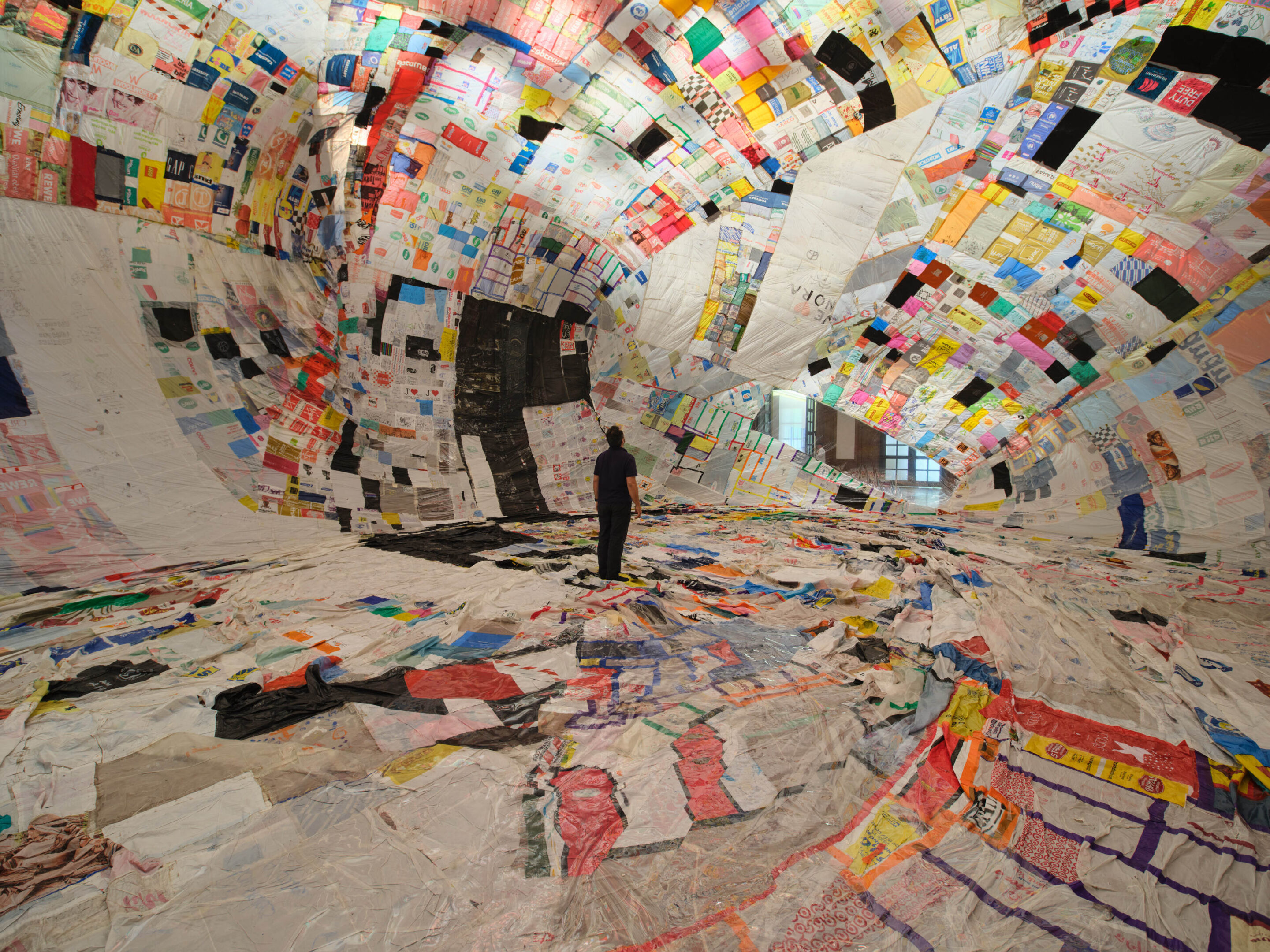

Exhibition views
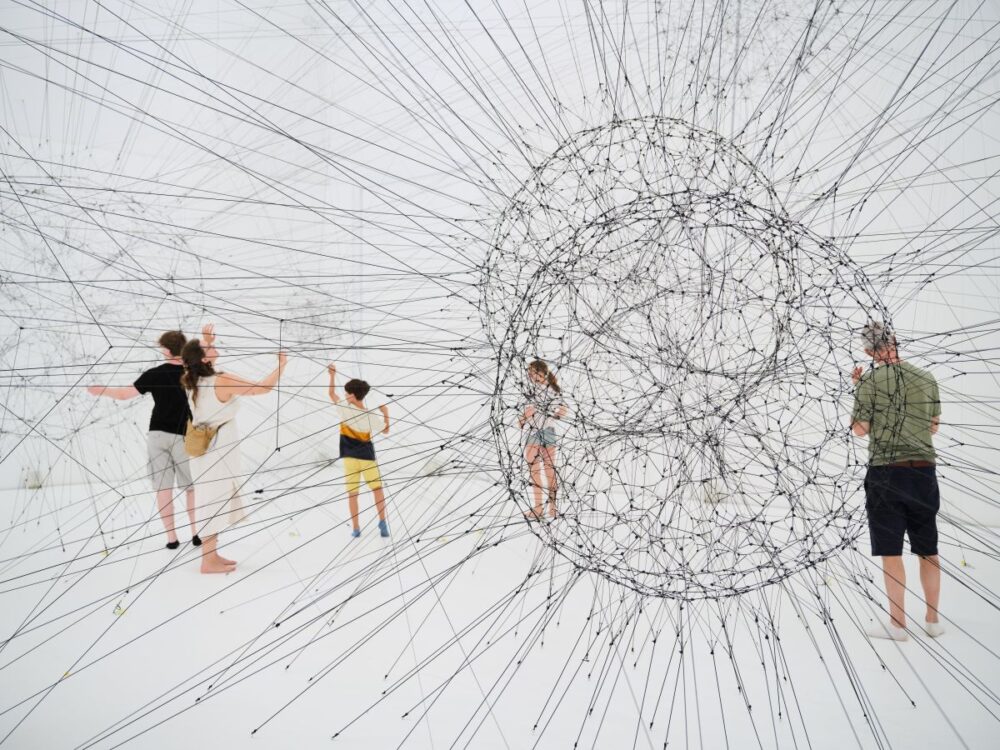
“Tomás Saraceno. Ancestral Futures”, exhibition view Haus der Kunst, 2026. Photo: Agostino Osio.
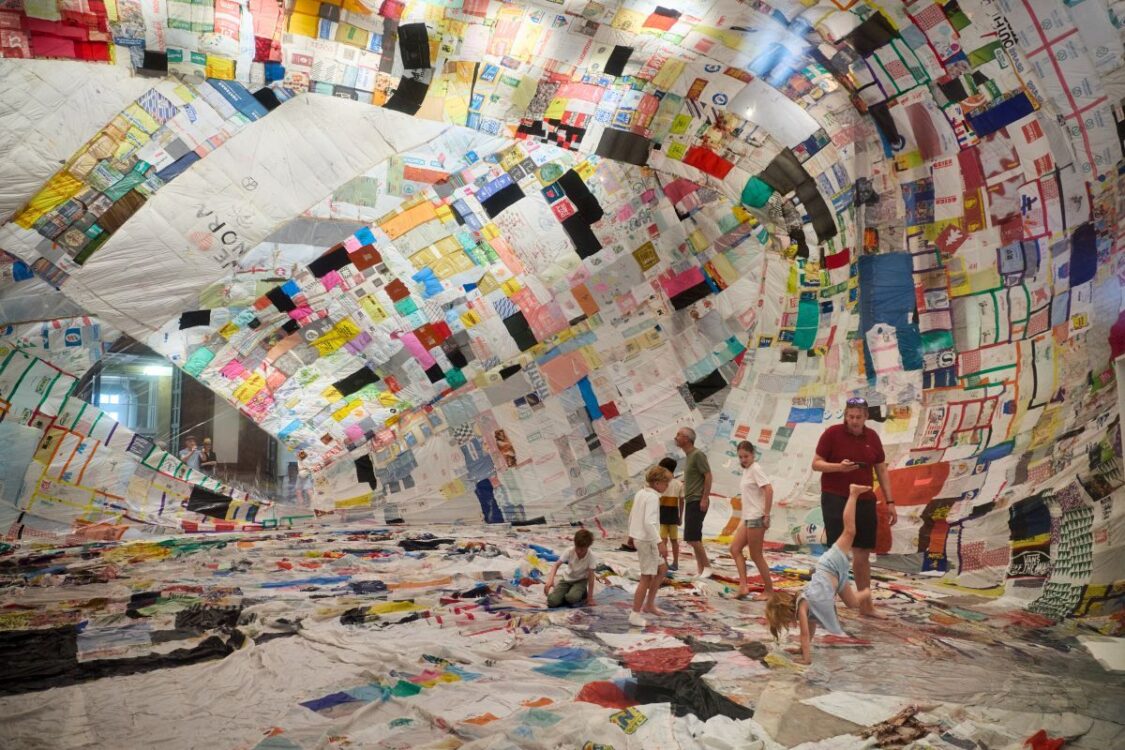
“Tomás Saraceno. Ancestral Futures”, exhibition view Haus der Kunst, 2026. Photo: Agostino Osio.
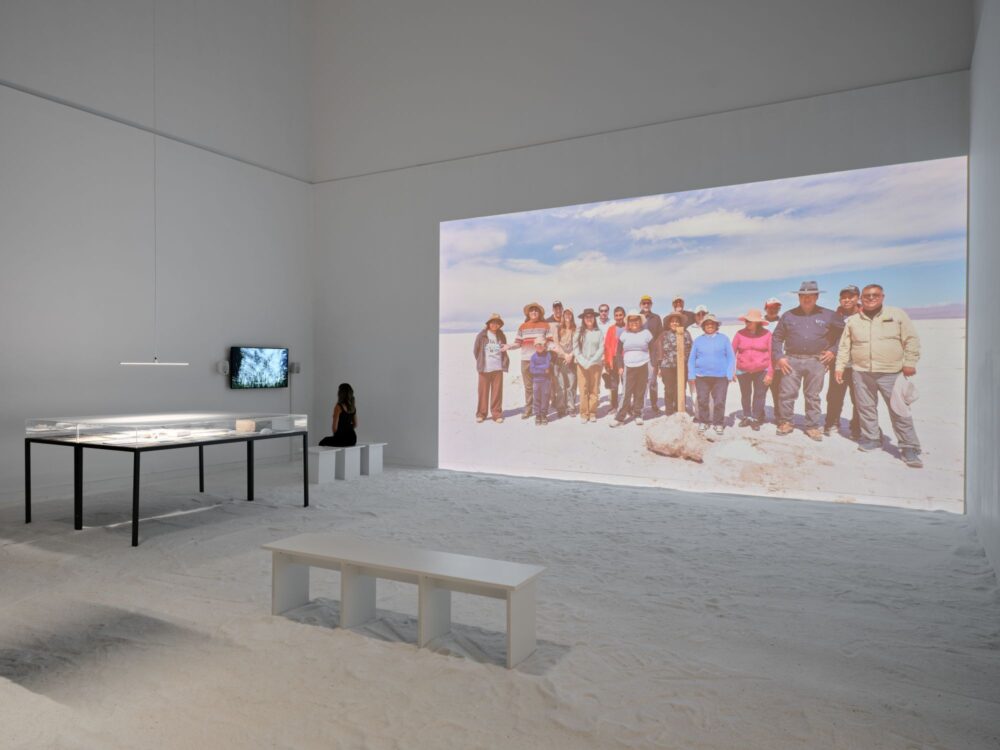
“Tomás Saraceno. Ancestral Futures”, exhibition view Haus der Kunst, 2026. Photo: Agostino Osio.

“Tomás Saraceno. Ancestral Futures”, exhibition view Haus der Kunst, 2026. Photo: Agostino Osio.
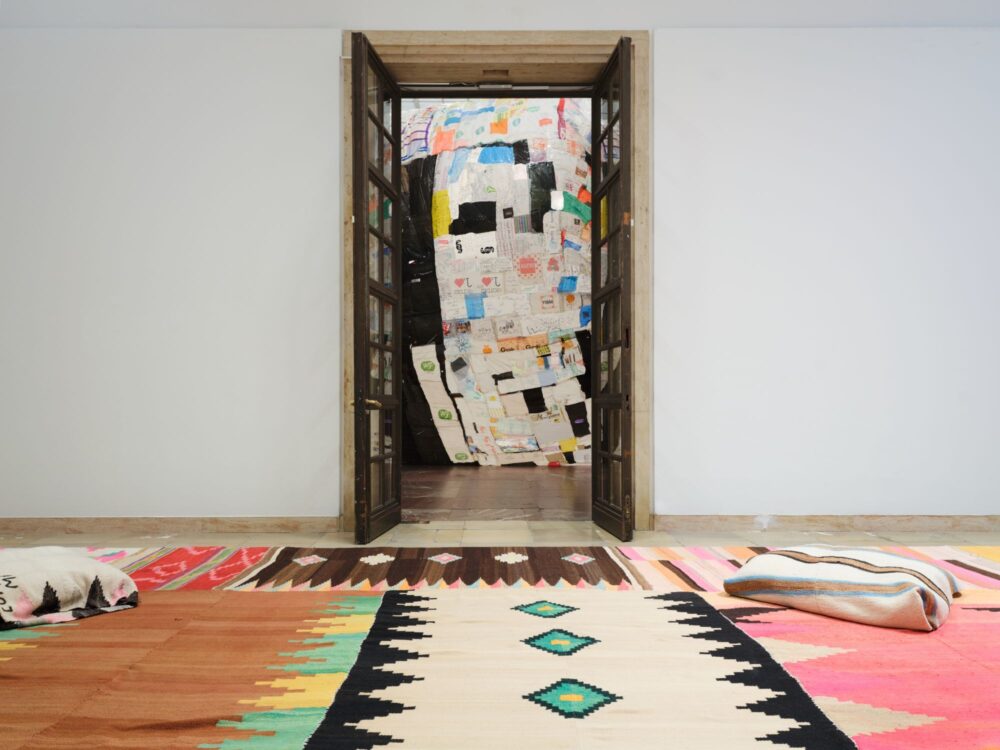
“Tomás Saraceno. Ancestral Futures”, exhibition view Haus der Kunst, 2026. Photo: Agostino Osio.
Artist info
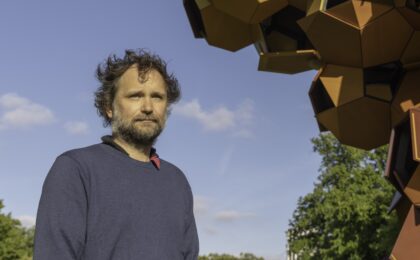
Tomás Saraceno
Tomás Saraceno (b. 1973) is an Argentina-born, Berlin-based artist whose projects devise platforms for ecosocial and participatory encounters, hosting and amplifying regenerative forms of knowledge. Connecting across scales and spectra, his work – and the transdisciplinary communities he has founded and continues to support – including Museo Aero Solar, the Aerocene Foundation and Arachnophilia – seeks to deepen reciprocity and attunement with other beings in the web(s) of life.
He has exhibited internationally at major institutions, including The Met, Palais de Tokyo, and Serpentine Galleries; held residencies at MIT, CNES, and The International Space University; given talks at WEF, TED, and Harvard; and staged interventions with COP20, COP21, and COP26.
Upcoming events:
22.10.26
Open Garten
Thursday 4:30 PM – 6:30 PM
22.10.26
Guided tour on ”Tomás Saraceno in collaboration. Ancestral Futures”
Thursday 6:30 PM – 7:30 PM
23.10.26
Family tour on ”Tomás Saraceno in collaboration. Ancestral Futures”
Friday 4:30 PM – 5:30 PM
24.10.26
Little Wildlife Explorers: Plant parts and travel
Saturday 2:00 PM – 2:45 PM