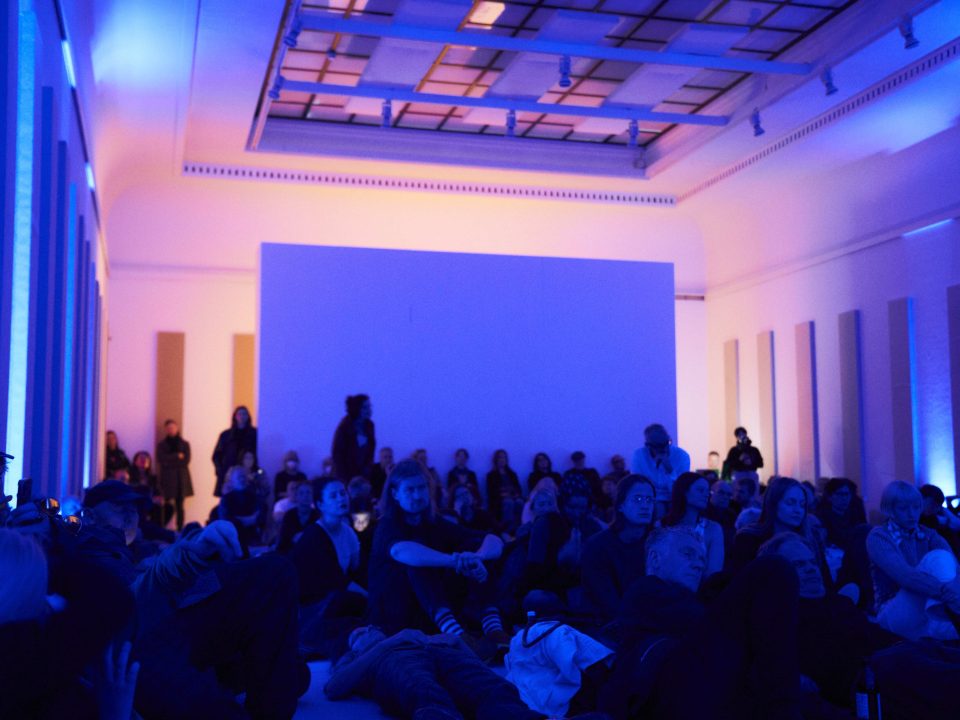
The TUNE programme for 2023 begins with music that is radically free, pushing the boundaries of improvisation, and which questions who it is for and how it is created. Space is made for a heightened group experience, and what Alvin Curran describes as “plain musical vulcanism”, often in reaction to the political and social context in which it is made. Curran’s work will form an echo to that of Joan Jonas, a longtime creative collaborator, with a shared passion for spontaneity, and non-linear structures and assemblages.
Through post-punk, dub, metal, free jazz, and experimental electronics, the line between composition and improvisation in the unfolding programme becomes blurred. Raw emotions and their expression form a connecting thread, enabled by group dynamics and creative intuition, and artists work collectively. A focus on the voice and direct expression unfolds, inspired by the work of Meredith Monk, and the voice is presented in all its power and vulnerability. Lyricism, neo-blues, soul and R&B guide introspection and intimacy, while the space between the sound and meaning of words is excavated, exposing the primeval and the instinctive. As with the work of Katalin Ladik, instability becomes a generative force creating space that is not static and overly defined, but open and with potential. The body is an instrument, and music is sourced from the depths within.
After Ihor Okuniev’s work Land is Tadleeh's My Bed, My Rules the third commission for the Terrassensaal. The Indian-Italian artist is fascinated by the evolution of both diegetic and non-diegetic sound in film. From Foley artists using sizzling bacon to simulate the sound of a rainstorm, to the discordant sounds of broken instruments in a horror film, sound from unseen sources defines the atmosphere just as much if not more than the camera lens.
For parts of TUNE in 2023 Haus der Kunst collaborates with Bourse de Commerce. From Paris to Munich, the two institutions will unveil joint musical projects, confronting different generations of artistic avantgarde, and weaving links between contemporary art and music.
Live Programme 2023
- 20. & 21.1. Alvin Curran
- 24. & 25.2. Standing on the Corner
- 18. & 19.3. Lifetones
- 20. & 21.4. Phew
- 25. & 26.5. Still House Plants & Exotic Sin
- 23. & 24.6. keiyaA & Dawuna
- 14. & 15.7. Katalin Ladik & Svetlana Maraš
- 6. & 7.10. Alex Zhang Hungtai & Tadleeh
- 3. & 4.11. Joanne Robertson & guests: Kool Music, Oliver Coates, Sidsel Meineche Hansen
- 1. & 2.12. Nivhek with a film by Takashi Makino
Artist info
Alvin Curran
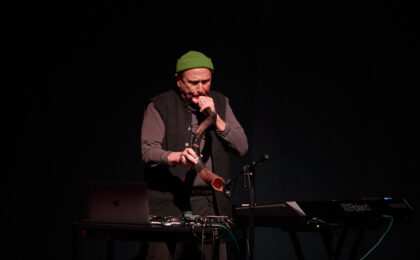
As a composer, performer, improviser, and co-founder of the ground-breaking music collective Musica Elettronica Viva (MEV), pioneer and iconoclast Alvin Curran has forged his own very personal language, through inspired research and invention. Starting his musical journey in Rome in 1965, he developed radical ideas around “spontaneous” music with MEV, revolutionising how music is made and performed, finding music in all people and in found objects. He simultaneously composed for Rome’s avant-garde theatre scene, and wrote solo works for synthesiser, voice, taped sounds and found objects. His love for natural and “instant” sound drove him to record the bustling sounds of Rome and places around the world, and with a passion for developing new music spaces, he wrote concerts for lakes, ports, parks, buildings, quarries, and caves. He continued to push boundaries, producing experimental radio works for ensembles to play simultaneously in different cities, and large-scale site-specific sound environments and installations.
Standing on the Corner
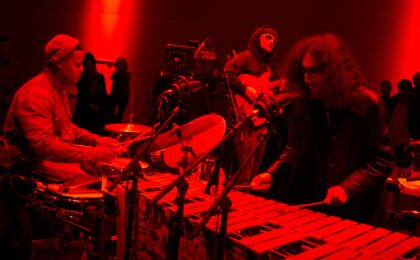
Standing on the Corner is an Art Ensemble founded in 2014 by the Puerto Rican artist Gio Escobar. It takes different shapes and forms with up to 30 musicians, all of the African and Caribbean diaspora, and the music viscerally reflects on their experience. The group moves freely between jazz improvisations, excursions into dub, garage-noise, and hip-hop lo-fi collages and with a predilection for multidisciplinary presentations, they have produced musical, visual, and experiential works for Serpentine Galleries, Bourse de Commerce, The Kitchen, Gavin Brown Enterprise, The Studio Museum Harlem, and Performance Space New York.
In 2017 they published a mixtape, Red Burns, a freeform, hour-long, continuous track that becomes an experimental manifesto, made together with artists from their community in New York. Responding collectively to recent world events, it combines elements of jazz, rumba, soul, funk, and hip-hop, poetry and fictitious radio broadcasts, to create a vivid and sensory experience of everyday life in New York City. They have collaborated with musicians such as MIKE, Earl Sweatshirt, Solange, and Danny Brown.
Lifetones
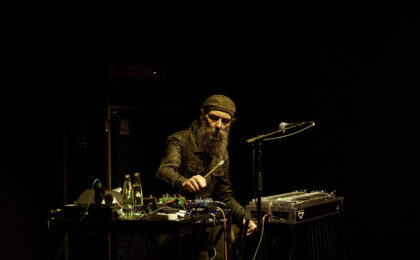
The English duo Lifetones, made up of This Heat’s Charles Bullen and Julius Cornelius Samuel, also known as Dub Judah, formed when the UK was experiencing turbulent times under Thatcherism and the global conservatism of the early 1980s. In what was to be their only album For A Reason (1983), now a cult favourite, they embraced the sounds of the local Caribbean community, bringing a reggae flavour together with the propulsive, rhythmic, and experimental music made by This Heat.
As guitarist and multi-instrumentalist for This Heat, Bullen broke with established conventions of genre. While This Heat’s sound embodied the anxiety of the Cold War era and anti-imperialist struggles, Lifetones’ music features uplifting dub reggae.
Phew
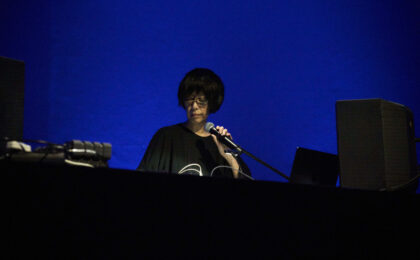
Phew is a legend and prolific figure in Japanese underground music who has been forging her own path for over four decades. She works with electronics and her voice, creating minimal, inquisitive music, layered with vocal expressions, sometimes wordless, feverish chants, or speak-singing. Her approach is instinctive, with a belief that ‘music is born from life, from the body first’, and her vocal experiments are bedded in warm shadows of acoustic sound and atmospheric synths. Through layering different rhythms and grooves, she draws listeners into multiple experiences of time. Inspired by the Sex Pistols in the late 1970s, Phew started the trailblazing avant-punk-psychedelic-rock band, Aunt Sally, and went on to collaborate as a solo artist with Ryuichi Sakamoto, who created a sound work for Dumb Type’s exhibition in 2022 at Haus der Kunst, as well as Conny Plank, Holger Czukay and Jaki Liebezeit of Can, and Alex Hacke of Einstürzende Neubauten. More recently she has worked with Jim O’Rourke and Ikue Mori, who has also collaborated with Joan Jonas.
Still House Plants
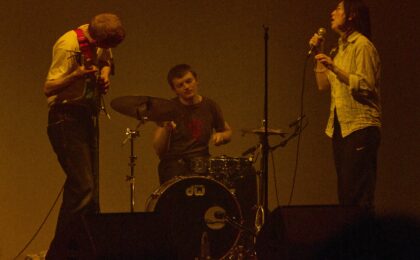
Still House Plants are made up of vocalist Jessica Hickie-Kallenbach, guitarist Finlay Clark, and drummer David Kennedy. With influences from garage to free jazz, R&B, and punk, they create fractured compositions that continually break down and fuse together again. Rapidly changing states form a radically honest and intimate exchange.
Exotic Sin
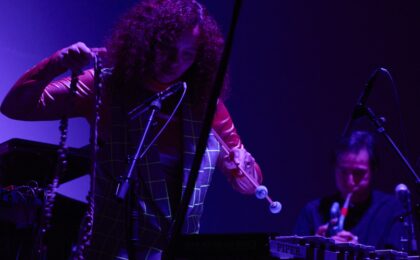
Kenichi Iwasa and Naima Karlsson form the duo Exotic Sin. Their sound is rich in tone, balancing the evocative depth of the piano with delicate and often playful percussive elements, and through improvisation and a broad range of instrumentation, they explore a rich tapestry of emotion.
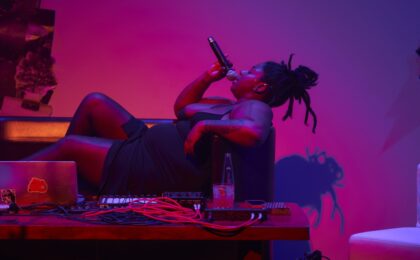
keiyaA
keiyaA is a singer-songwriter, producer and multi-instrumentalist. Raised in Chicago's south side, she synthesises her jazz training on the alto saxophone, with R&B and hip-hop influences, and her powerful voice and dense lyricism about life as a Black woman. keiyaA learned to produce, and released her first EP Work in 2015 and later her debut LP, Forever, Ya Girl (2020). Her compositions and performances bring together different instrumentation, often with intermittent vocal samples from sources such as the poet Jayne Cortez, and Paul Mooney from the 2003 Chappelle's Show skit, "Ask a Black Dude". She sings about loving deeply, intergenerational pain, and empowerment.
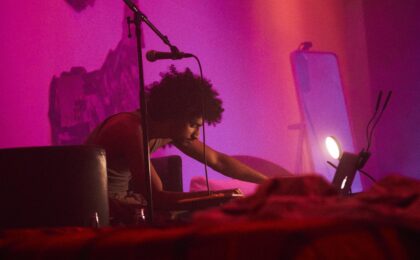
Dawuna
Ian Mugerwa Byenkya, known as Dawuna, is a songwriter and multi-instrumentalist. Raised in Kenya and Virginia, he trained in cello before experimenting with electronics, and after moving to New York recorded his first album Glass Lit Dream (2021) in his dimly-lit basement apartment, often under the moonlight. Blending R&B and neo-soul, with electronic, industrial sounds, his lyrics drift in and out, exploring ideas around desire, ego, pride and male fragility. In some tracks he interweaves samples of recordings of the Black Panthers. He cites empowering gospel music, from Aretha Franklin to Reverend James Cleveland, as a strong influence, as well as the words and teachings of Indian Hindu mystic, Sri Ramakrishna.
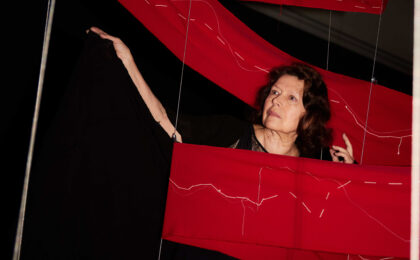
Katalin Ladik
Katalin Ladik (b. 1942, Novi Sad) is a a key figure in Central and Eastern European art. Through her work she challenges gender roles and female archetypes, using her body and voice as both instrument and medium. She devotes her artistic work to concrete and visual poetry, performance, sound and sculpture.
Ladik’s birthplace Novi Sad, a city in the former Yugoslavia (now Serbia), has long been a conduit between the Balkans and parts of Central and Eastern Europe. The multilingual demographics of Novi Sad—being majority Serbian and Hungarian—shaped Ladik’s visual approach to language and poetry. Over the course of the 1960s, Ladik became an integral part of the Novi Sad literary and artistic avant-garde. Moreover, in her performances, Ladik engaged the folkloric and nationalistic discourses prevalent in that region with great irony and piercing critique.
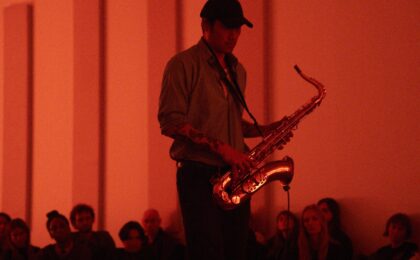
Alex Zhang Hungtai
Through a sonic practice that explores interconnectedness and transformation, Taiwanese-Canadian composer and musician Alex Zhang Hungtai creates music that transcends genre and medium. His Dirty Beaches project drew critical acclaim with the 2010 release of Badlands. Under other aliases he worked more improvisationally, reshaping various instruments and sounds into a form of ritual music.
Hungtai’s work as a composer for film began with documentaries and eventually led to the score for 2018’s August at Akiko’s, a film he starred in. He can also be seen playing saxophone in season three of David Lynch’s Twin Peaks.
Tadleeh
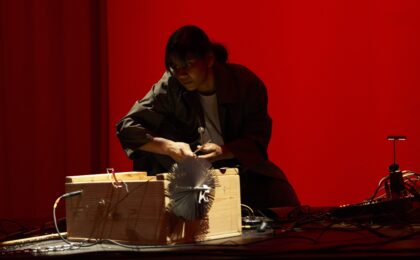
Under the name Tadleeh, Indian-Italian artist Hazina is heavily involved in the Milan electronic music scene. With a background in Cinema Studies, Hazina is fascinated by the evolution of both diegetic and non-diegetic sound in film. From Foley artists using sizzling bacon to simulate the sound of a rainstorm, to the discordant sounds of broken instruments in a horror film, sound from unseen sources defines the atmosphere just as much if not more than the camera lens.
Joanne Robertson
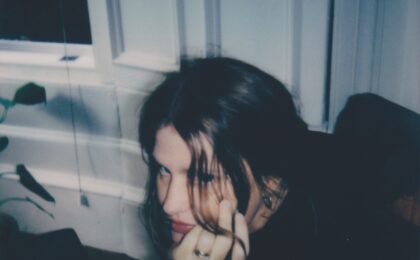
Joanne Robertson is a British musician, painter and poet living in Glasgow. She often starts from spontaneous moments of expression and teases them out into cascading waves of feeling, forming a tapestry where pain and joy coexist. She collaborates often, most recently with Dean Blunt on “Black Metal 2” and with Sidsel Meineche Hansen on “Alien Baby”, both released in 2021.
Nivhek
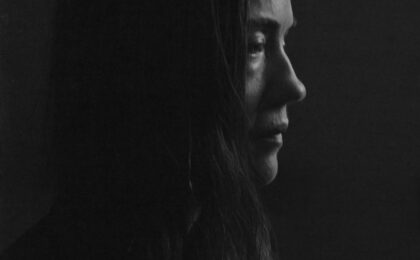
Recording and performing under both Nivhek and Grouper, Liz Harris starts with small sounds that reverberate into ever-expanding spaces and take on a character that is both unnerving and transcendent. She debuted the Nivhek project in 2019 with After Its Own Death / Walking In A Spiral Towards The House. The genesis of that project was an Arctic residency, where she experienced isolation in endless daylight, surrounded by abandoned buildings being absorbed by nature itself.