Rise and Fall of Apartheid: Photography and the Bureaucracy of Everyday Life

Exhibition 15.02 – 26.05.13

"Rise and Fall of Apartheid" offers a comprehensive historical overview of the pictorial response to apartheid, which has never been undertaken before. Through its images, it explores the significance of the civil rights struggle, from how apartheid defined South Africa’s identity from 1948 to 1994, to the rise of Nelson Mandela, and finally its lasting impact. It examines the aesthetic power of the documentary form – from the photo essay to reportage, social documentary to photojournalism and art – in recording, analyzing, articulating, and confronting apartheid’s legacy and effects on everyday life in South Africa.  

Apartheid, the compound Dutch word meaning separate, was designed to promote racial segregation and white domination. In 1948, after the Afrikaner National Party’s surprise victory, apartheid was introduced as state policy. The reorganization of civic, economic, and political structures became increasingly violent and penetrated even the most mundane aspects of social existence. The exhibition argues that the rise of the Afrikaner National Party and its introduction of apartheid changed the pictorial perception of the country from a colonial space based on segregation to a highly contested space based on the ideals of equality, democracy, and civil rights. Photography was almost instantaneously alert to this change and transformed its visual language to a social instrument. No one photographed South Africa and the struggle against apartheid better, more critically and incisively, with deep pictorial complexity and penetrating insight, than South African photographers. This exhibition explores and pays tribute to their exceptional photographic achievement. Historic events like the "Treason Trial" of 1956-61 and Nelson Mandela’s 1990 release also appear. The exhibition’s focus, however, is not on the history of apartheid, but rather explores its normative symbols and signs. 

Vivid, evocative, and dramatic, "Rise and Fall of Apartheid" features nearly 70 artists and covers more than 60 years of photographic and visual production that form part of the historical record of modern South African identity. With more than 500 photographs, artworks, films, videos, documents, posters, and periodicals, the exhibition is a rich tapestry of materials. Included in the exhibition are works of pioneering South African photographers such as Eli Weinberg, David Goldblatt, Peter Magubane, Jurgen Schadeberg, Sam Nzima, Ernest Cole, and the responses of contemporary artists including Adrian Piper, Hans Haacke, or William Kentridge. The exhibition also features the works of a new generation of South African photographers. 

"Rise and Fall of Apartheid: Photography and the Bureaucracy of Everyday Life" is organized by the International Center of Photography, New York in collaboration with Haus der Kunst.

Art information
Staff members answer your questions about the exhibition:
Sa 12 — 5 pm / Su 12 — 5 pm

Eli Weinberg, Crowd near the Drill Hall on the opening day of the Treason Trial, Johannesburg, December 19, 1956, photo: Eli Weinberg, Times Media Collection, Museum Africa, Johannesburg
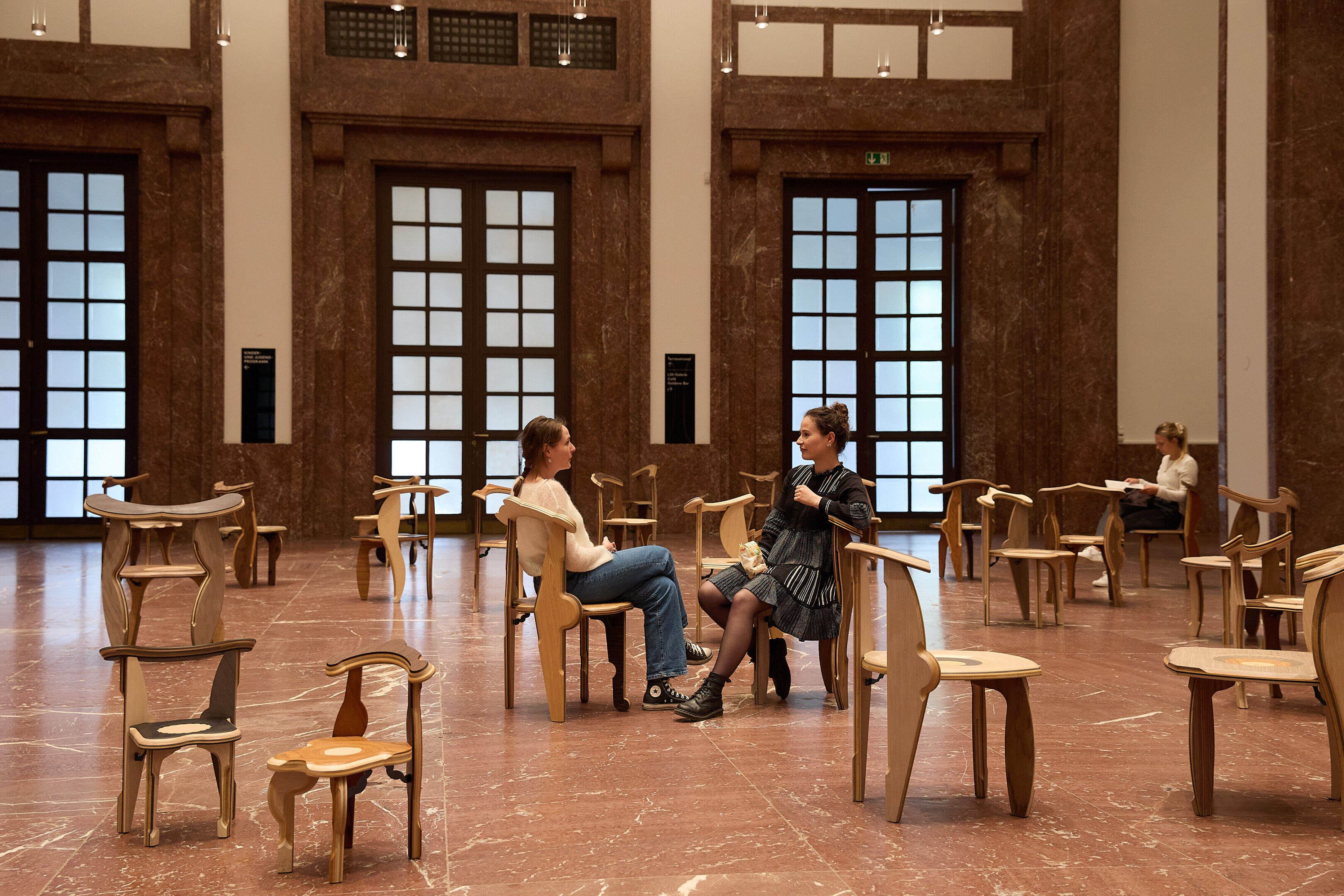
Rise and Fall of Apartheid, installation view, Haus der Kunst, 2013, photo Wilfried Petzi
Greame Williams, Portrait of Nelson Mandela painted on the grass of Soweto's largest football stadium during an election rally, 1994, courtesy the artist © Greame Williams

Stretch your view


Stretch your view

Rise and Fall of Apartheid 

15.02 – 26.05.13 

Public tour / English

→ Friday, 24.05, 6:30 pm


Picture Gallery


FAZ Article on "Rise and Fall of Apartheid"

Review of the exhibition "Rise and Fall of Apartheid" in the "Frankfurter Allgemeine Zeitung" on March 5, 2013. (In German) MORE


Sir Sidney Kentridge

Interview

An interview with the renowned antiapartheid activist lawyer Sir Sydney Kentridge. He played a leading role in a number of the most significant political trials in apartheid era, including the 1977 inquest of Stephen Biko following his death in custody, was a member of Nelson Mandela's legal team during his 27-year imprisonment, and helped erode the legacy of apartheid laws in South Africa. MORE


Rise and Fall of Apartheid: Bibliography

Bibliography

Extensive bibliography on the subject of apartheid with a focus on photography, fiction and autobiography as well as academic publications. MORE


Rise and Fall of Apartheid - Article in the NY Times

In the press

"Photography is the common language of modern history. It's everywhere; and everyone, in some way, understands it." (The New York Times) MORE


Okwui Enwezor: Rise and Fall of Apartheid

Essay

The essay offers a comprehensive overview of the pictorial response to apartheid in South Africa. MORE


William Kentridge: Tide table

Video

"Tide Table" is one of ten films by South African artist William Kentridge that "Rise and Fall of Apartheid" shows in its own cinema. MORE


Rise and Fall of Apartheid: Interview with Peter Magubane

Interview

Interview with Peter Magubane, one of South Africa’s most distinguished photo journalists. MORE


"Soweto Uprising" – Readymade and photographs

Document

Kendell Geers' readymade "Untitled, 1976" is a mortuary register listing the name of a young boy who was killed during the Soweto Uprising – an event captured also in numerous photographs in the exhibition "Rise and Fall of Apartheid". MORE


Exhibition program on video

Video

A video containing brief visual descriptions of current exhibitions. MORE


The Conditions of Spectrality and Spectatorship in Thomas Ruff's Photographs

Essay

Essay by Okwui Enwezor MORE


Jenny Holzer

Exhibition 16.11 – 12.12.93

Where women are dying, I am wide awake MORE


Albert Renger-Patzsch — Retrospective

Exhibition 01.02 – 13.04.98

Retrospective MORE


Bernd und Hilla Becher

Exhibition 16.06 – 19.09.04

Bernd and Hilla Becher met in Düsseldorf at the end of the fifties and have been working together since then, for over forty years, on an archive for industrial architecture. Invariably using the neutral background of a grey and cloudless sky, they place their chosen images centre-picture and format-filling. Following previously determined criteria, the photos make up so-called "Typologies". In exhibitions the black and white photographs are arranged into tableaux, thus a screen-like presentation emerges, giving the viewer the opportunity to compare images. MORE


Parrworld

Exhibition 07.05 – 17.08.08

For more than 30 years, Parr has been documenting society and everyday culture, predominantly in his home country Great Britain, but beyond this, he has also documented global phenomena such as mass tourism, consumerist behaviour or so-called leisure time. He is considered to be a satirist of contemporary life; his photographs are unsparingly critical and his inimitable eye unmasks the banal as well as the grotesque. MORE


William Eggleston

Exhibition 20.02 – 17.05.09

The American artist William Eggleston (*1939, Memphis, USA) is considered to be one of the most idiosyncratic photographer’s of the 20th century. This comprehensive retrospective follows his artistic development from the early black-and-white images and pioneering transition to colour photography, all the way to the present day. MORE


Michael Schmidt

Exhibition 21.05 – 22.08.10

The works by Berlin-based artist Michael Schmidt present a further distinctive position within contemporary photography shown at the Haus der Kunst. Michael Schmidt takes only black-and-white photographs since, in his view, this neutralises our colourful world reducing it to a wide spectrum of greys. MORE


Thomas Ruff

Exhibition 17.02 – 20.05.12

The exhibition in Haus der Kunst is the first comprehensive presentation of the works of Thomas Ruff in more than ten years. It chronologically tracks his artistic development. MORE


Withholding Images

Essay

Withholding Images MORE


Brassai — From Surrealism to the Informal

Exhibition 21.01 – 26.03.95

An overview of the photographic work of the Hungarian artist MORE